

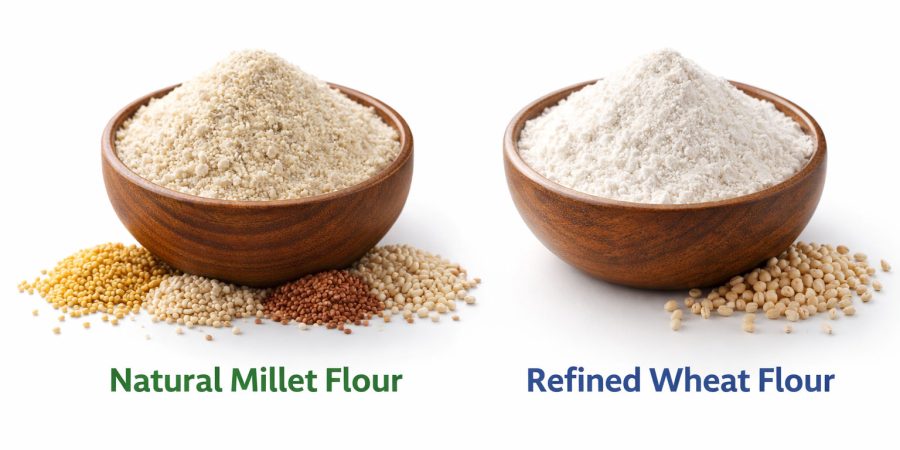
In recent years, people have started paying more attention to what they eat. As a result, many families are switching from regular wheat flour to natural millet flour. But why is this change happening? Is millet really healthier than wheat?
The answer is yes. Natural millet flour offers several health benefits that make it a better choice for modern lifestyles. In this article, we will explore the reasons in simple and clear language. Buy natural millet flour.
Understanding Regular Wheat Flour
Before comparing, let us understand wheat flour.
Most commonly used wheat flour today is refined. During processing, the outer bran and germ layers are removed. Because of this, much of the fiber and nutrients are lost. gluten-free flour alternative.
As a result, refined wheat flour:
- Contains fewer nutrients
- Has a high glycemic index
- May cause bloating in some people
- Contains gluten
Although whole wheat flour is better than refined flour, it still may not suit everyone. 7 Powerful Reasons Natural Millet Flour Is Healthier Than Wheat.
What Is Natural Millet Flour?
Natural millet flour is made from small ancient grains like:
- Ragi (Finger Millet)
- Jowar (Sorghum)
- Foxtail Millet
- Bajra (Pearl Millet)
Unlike heavily processed wheat flour, millet flour is usually stone-ground and minimally processed. Therefore, it retains more nutrients. millet flour for diabetes. Why Natural Millet Flour Is a Healthier Choice Than Wheat.
Moreover, millets are traditional Indian grains that have been consumed for thousands of years.
Why Natural Millet Flour Is Better Than Wheat Flour
1. For Weight Loss
2. For Diabetes Control
3. For Better Digestion
4. For Healthy Living
9 Proven Benefits of Natural Millet Flour Over Wheat Flour
1. Natural Millet Flour Is Rich in Fiber
One of the biggest advantages of natural millet flour is its high fiber content.
Fiber is essential because it:
- Improves digestion
- Prevents constipation
- Keeps you full longer
- Supports gut health
In contrast, refined wheat flour contains very little fiber. Therefore, switching to millet flour helps improve digestive health naturally. healthy flour replacement.
2. It Has a Lower Glycemic Index
Another important benefit is blood sugar control.
Millets have a lower glycemic index compared to regular wheat flour. This means they release sugar slowly into the bloodstream.
As a result:
- Blood sugar levels remain stable
- Energy levels stay consistent
- Risk of insulin spikes reduces
For people with diabetes or pre-diabetes, natural millet flour can be a safer alternative. best flour for weight loss.
3. Natural Millet Flour Is Gluten-Free
Many people today experience gluten sensitivity. Wheat flour contains gluten, which can cause:
- Bloating
- Gas
- Digestive discomfort
- Inflammation
On the other hand, most millets are naturally gluten-free. Therefore, they are suitable for people with gluten intolerance.
Even if you are not gluten sensitive, reducing gluten intake can improve digestion. Best Natural Millet Flour.
4. Supports Weight Loss and Weight Management
If you are searching for the best flour for weight loss, natural millet flour is a strong option. gluten-free flour alternative.
Because it is rich in fiber and protein, it:
- Keeps you full for longer
- Reduces frequent hunger
- Prevents overeating
- Supports metabolism
Wheat flour products often cause quick hunger due to rapid sugar spikes. In contrast, millet flour provides steady energy. millet flour for diabetes.
5. Better Nutritional Profile
Millets are rich in:
- Iron
- Calcium
- Magnesium
- Phosphorus
- Antioxidants
- Plant-based protein
For example:
- Ragi is high in calcium
- Jowar is rich in iron
- Foxtail millet supports heart health
Therefore, natural millet flour offers more micronutrients compared to regular wheat flour. healthy flour replacement.
6. Good for Heart Health
Heart disease is increasing due to poor eating habits. However, millet flour can help.
Millets contain:
- Healthy fats
- Antioxidants
- Magnesium
These nutrients help reduce bad cholesterol levels. As a result, heart health improves naturally. Buy natural millet flour online.
7. Suitable for Modern Lifestyle Diseases
Today, many people suffer from:
- Diabetes
- Obesity
- High blood pressure
- Thyroid issues
Switching to natural millet flour can support overall wellness. Because it is nutrient-dense and low in simple carbohydrates, it fits modern health needs. millet flour benefits.
8. Environmentally Sustainable Choice
Interestingly, millets are also better for the environment.
They require:
- Less water
- Fewer fertilizers
- Minimal pesticides
Therefore, choosing millet flour not only supports your health but also supports sustainable farming. wheat flour vs millet flour.
9. Easy to Use in Daily Cooking
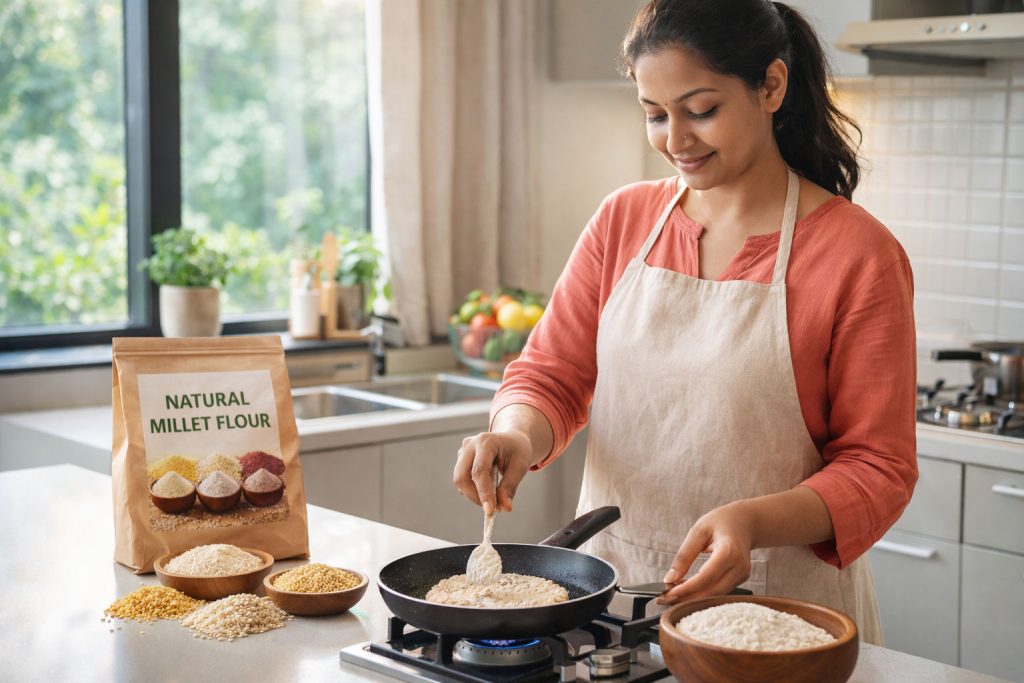
Many people think millet flour is difficult to cook. However, this is not true.
You can prepare:
- Millet rotis
- Millet dosa
- Millet idli
- Pancakes
- Porridge
- Upma
You can even mix millet flour with wheat flour during the transition phase. low glycemic flour options.
Wheat Flour vs Natural Millet Flour: Quick Comparison
| Feature | Wheat Flour | Natural Millet Flour |
|---|---|---|
| Fiber | Low (refined) | High |
| Gluten | Yes | No |
| Blood Sugar Impact | High | Low |
| Nutrient Density | Moderate | High |
| Weight Loss Friendly | Limited | Yes |
| Digestion | May cause bloating | Easy to digest |
Clearly, natural millet flour provides more health advantages.
Who Should Switch to Natural Millet Flour?
You should consider switching if you:
- Want to lose weight
- Have diabetes
- Experience gluten sensitivity
- Feel bloated after wheat consumption
- Want better digestion
- Prefer natural and traditional foods
Even children and elderly people can benefit from millet-based meals. high-fiber flour for digestion.
Transitioning from Wheat to Millet
Switching suddenly may feel different. Therefore, start gradually.
Step 1: Replace 25% of the wheat flour with millet flour.
Step 2: Increase to 50% after two weeks.
Step 3: Slowly move to full replacement if comfortable.
This makes adaptation easier.
Final Thoughts
In conclusion, natural millet flour is clearly a healthier alternative to regular wheat flour. It offers higher fiber, better nutrients, stable blood sugar control, and improved digestion. natural flour for daily cooking.
Moreover, it supports weight management and modern health conditions. Because it is gluten-free and minimally processed, it aligns with today’s clean eating movement.
Small changes create big results. Replacing wheat flour with natural millet flour can be a simple yet powerful step toward better health.
Choose natural. Choose balanced nutrition. Choose long-term wellness.
Frequently Asked Questions (FAQs)
1. What is natural millet flour?
Natural millet flour is flour made from whole millets like ragi, jowar, foxtail, or bajra. It is minimally processed, high in fiber, and free from artificial additives.
2. Is natural millet flour healthier than wheat flour?
Yes. Natural millet flour contains more fiber, has a lower glycemic index, and is usually gluten-free. It supports better digestion and stable blood sugar levels.
3. Is millet flour good for diabetes?
Millet flour has a low glycemic index, which helps regulate blood sugar levels. However, portion control and medical advice are always recommended.
4. Can I use natural millet flour for daily cooking?
Yes. You can use it to make rotis, dosa, idli, pancakes, porridge, and even baked items. It can fully replace or partially replace wheat flour.
5. Does natural millet flour contain gluten?
Most millets, like ragi, jowar, and foxtail, are naturally gluten-free. Always check packaging for cross-contamination if you have celiac disease.
6. Is natural millet flour good for weight loss?
Yes. Because it is rich in fiber and protein, it keeps you full for longer and reduces overeating. This supports healthy weight management.
7. What are the main health benefits of millet flour?
Millet flour supports digestion, heart health, blood sugar control, bone strength, and sustained energy levels.
8. How should I store natural millet flour?
Store it in an airtight container in a cool, dry place. Refrigeration is recommended for longer shelf life.
9. Which millet flour is best for beginners?
Ragi flour and jowar flour are easy to use and widely accepted in Indian cooking. They are ideal for rotis and dosa.
10. Where can I buy natural millet flour with home delivery?
You can purchase natural millet flour from trusted local suppliers or online stores that offer fresh stock and doorstep delivery.
11. Is millet flour suitable for children and elderly people?
Yes. Millet flour is nutrient-rich and easy to digest, making it suitable for all age groups.
12. What is the difference between whole wheat flour and millet flour?
Whole wheat flour contains gluten and has moderate fiber. Millet flour is gluten-free, higher in fiber, and has better mineral content.